On this page
Hi Everyone!
As we all aware, Polly v8 is released sometime back and so is .NET 8, it is ready for Production use 🥳.
I would like to keep this series as relevant as possible, so that developers can use it in their day to day work.
What’s new in .NET 8 (relevant to this post)?
Microsoft has released a new package for resiliency, which is Microsoft.Extensions.Http.Resilience. This package is a wrapper around Polly v8 and provides a way to implement Polly strategies for HttpClientFactory.
Setup
For demonstration purpose, I have created a .NET 8 Web API project so that we can inject fault in our API as and when required. For some initial use cases, it will look like below :
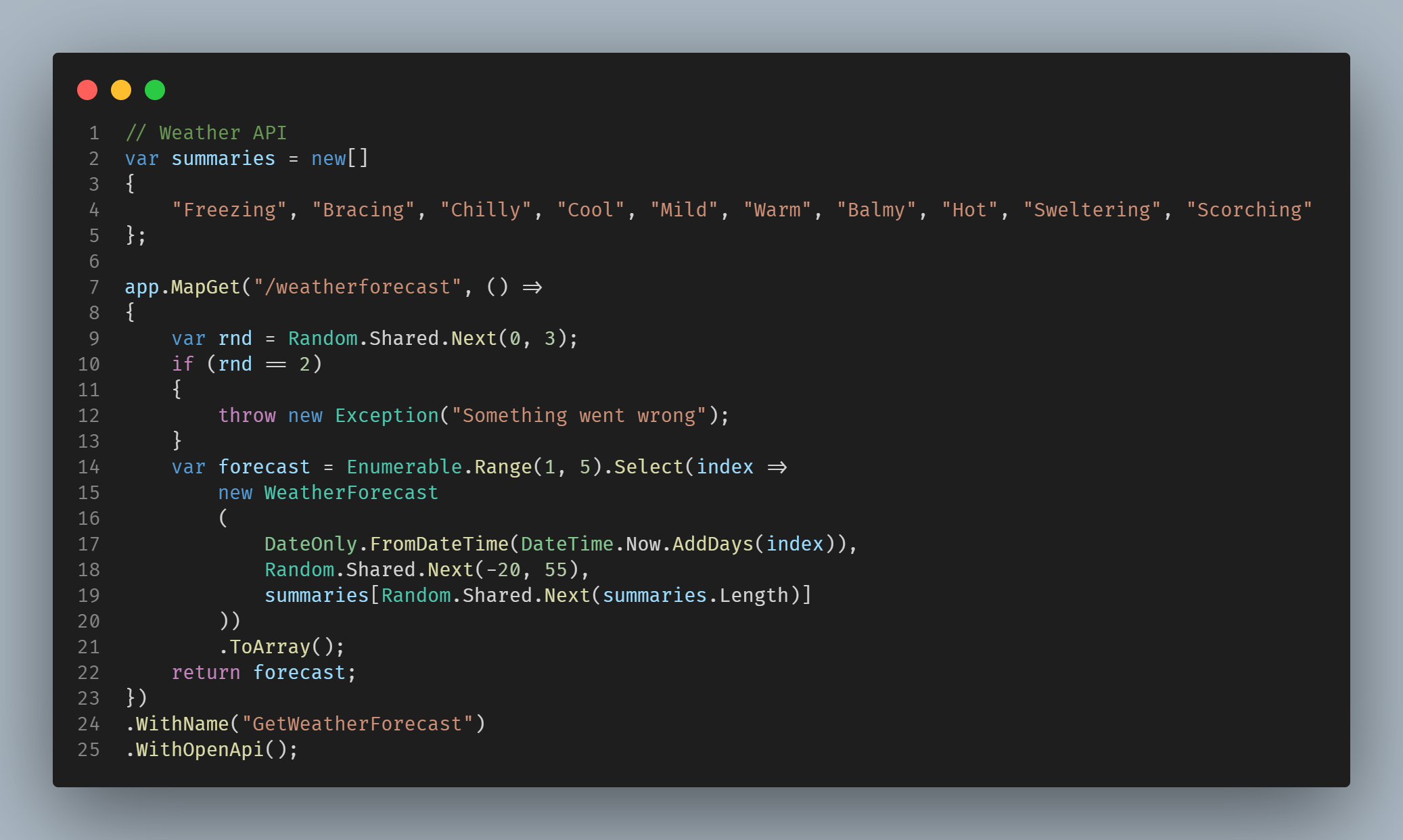
Just boilerplate code, nothing fancy here apart from the fact that we throw exception randomly to simulate the fault.
We will also create a console application to consume this API and will implement Polly strategies for HttpClientFactor here.
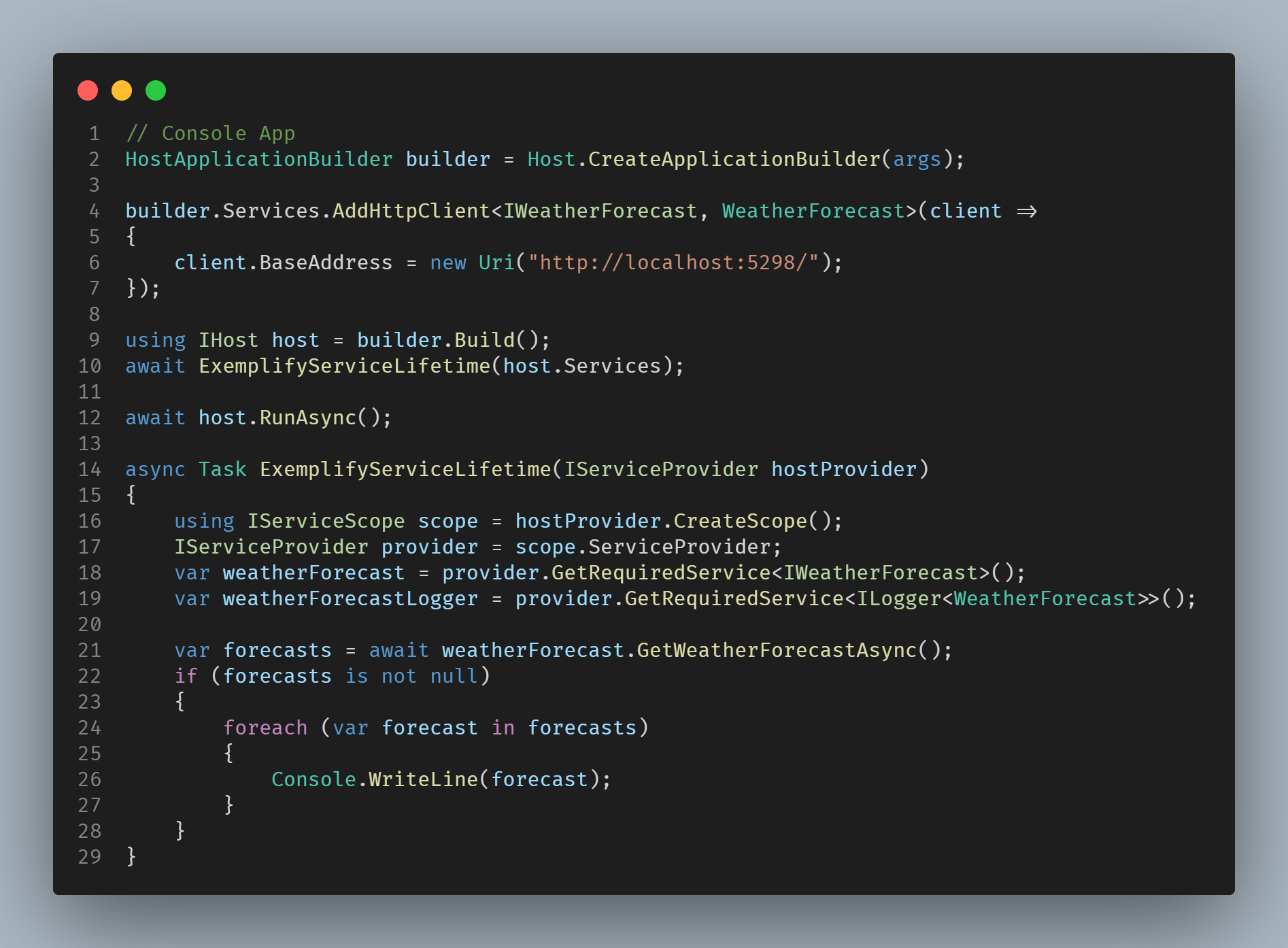
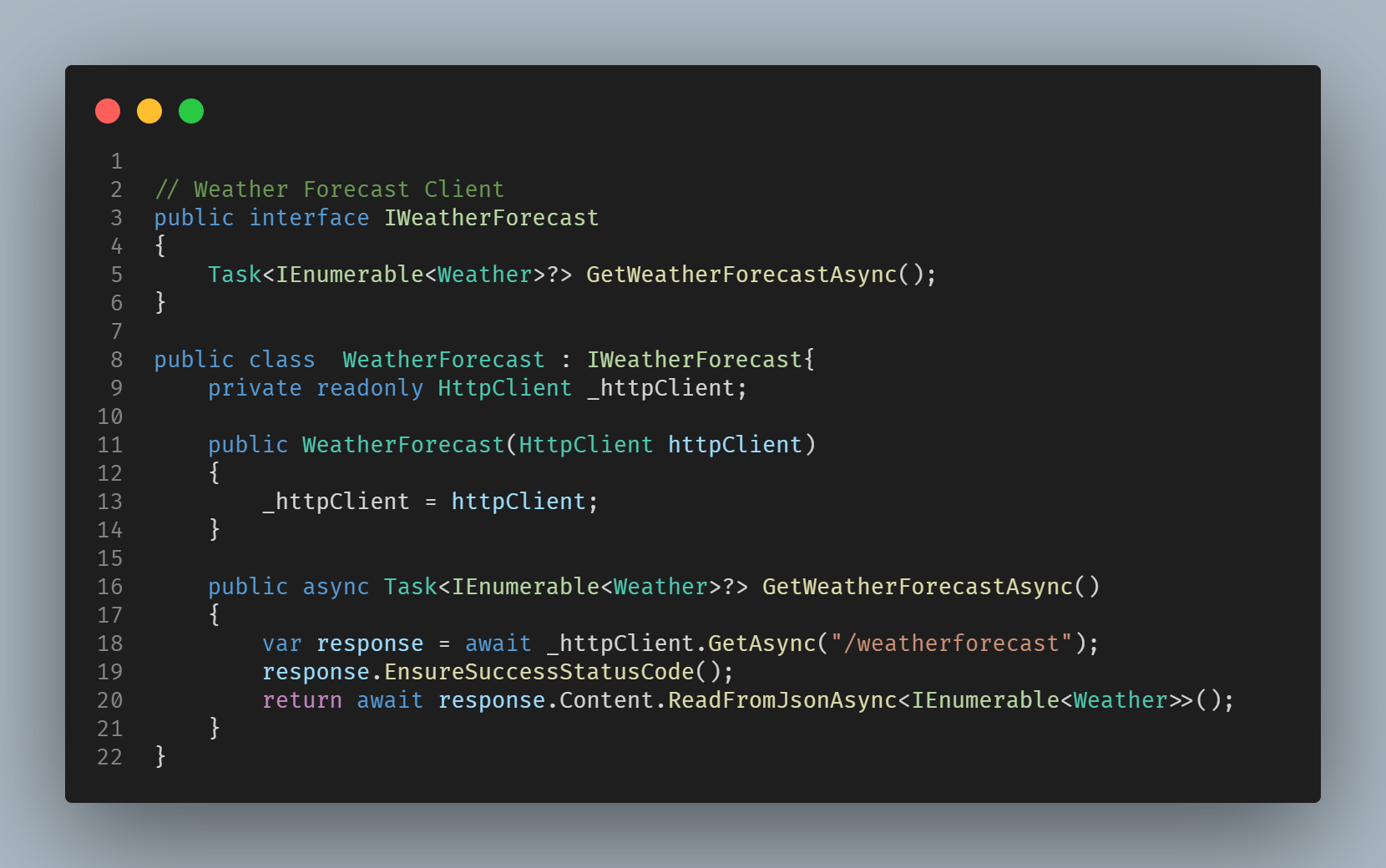
We are using Typed HttpClient here, so we will create a implementation for that as well.
Retry Resilience Strategy
Resilience strategies (previously known as Policy in v7) are essential components of Polly, designed to execute user-defined callbacks while adding an extra layer of resilience.
Polly categorizes resilience strategies into two types: Reactive and Proactive.
Defination of both are as below (from Polly documentation):
Reactive: These strategies handle specific exceptions that are thrown, or results that are returned, by the callbacks executed through the strategy.
Proactive: Unlike reactive strategies, proactive strategies do not focus on handling errors by the callbacks might throw or return. They can make proactive decisions to cancel or reject the execution of callbacks (e.g., using a rate limiter or a timeout resilience strategy).
Retry is a reactive strategy, which means it will handle specific exceptions that are thrown, or results that are returned, by the callbacks executed through the strategy.
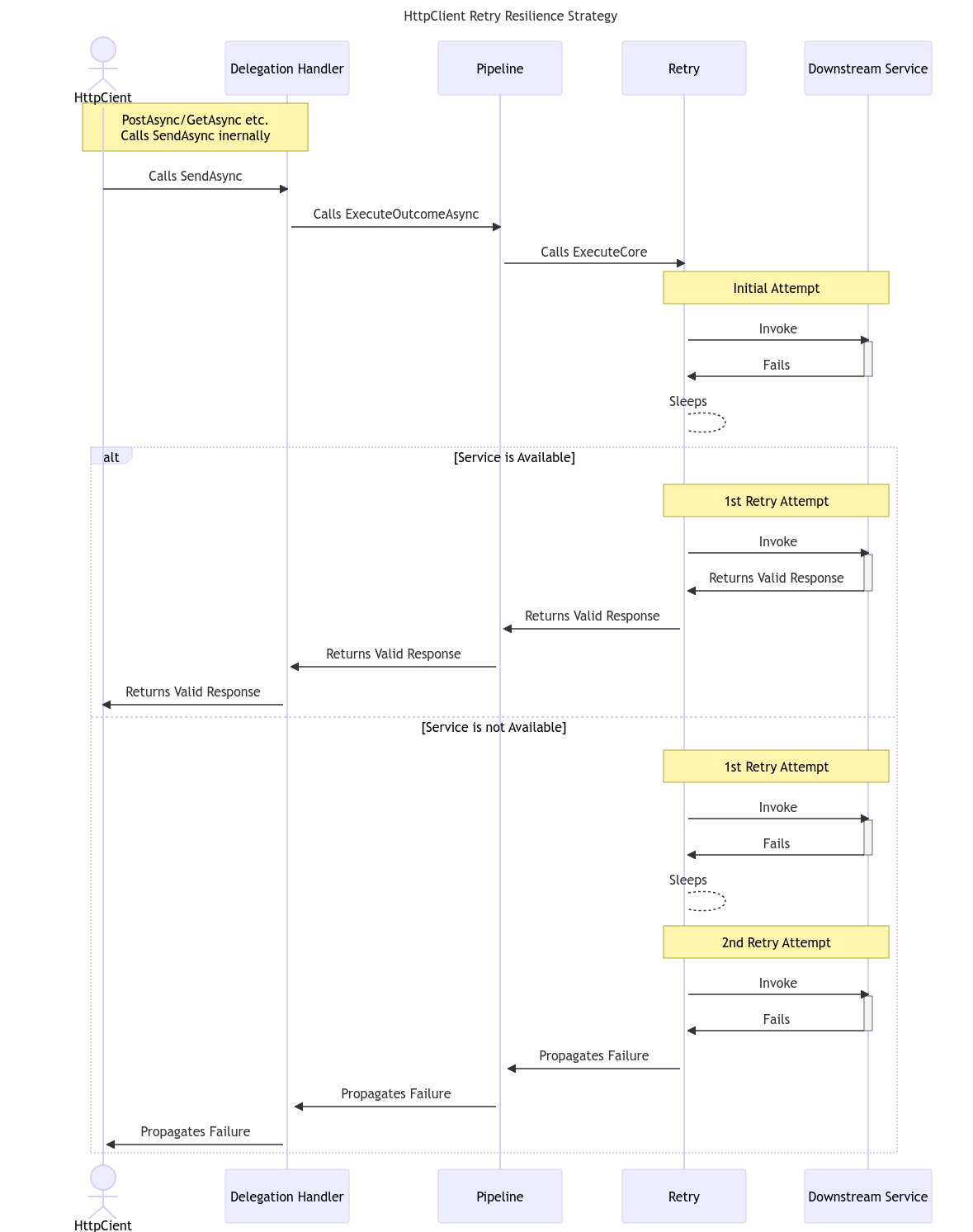
These strategies can not run on their own, they need to be executed by a resilience pipeline.
Below is the sequence of diagram of how HttpClientFactory will execute the resilience strategy :
Enough of theory, let’s implement Retry strategy for our HttpClientFactory.
First thing first, we will add all required packages to our console application, below are the packages we need to install :
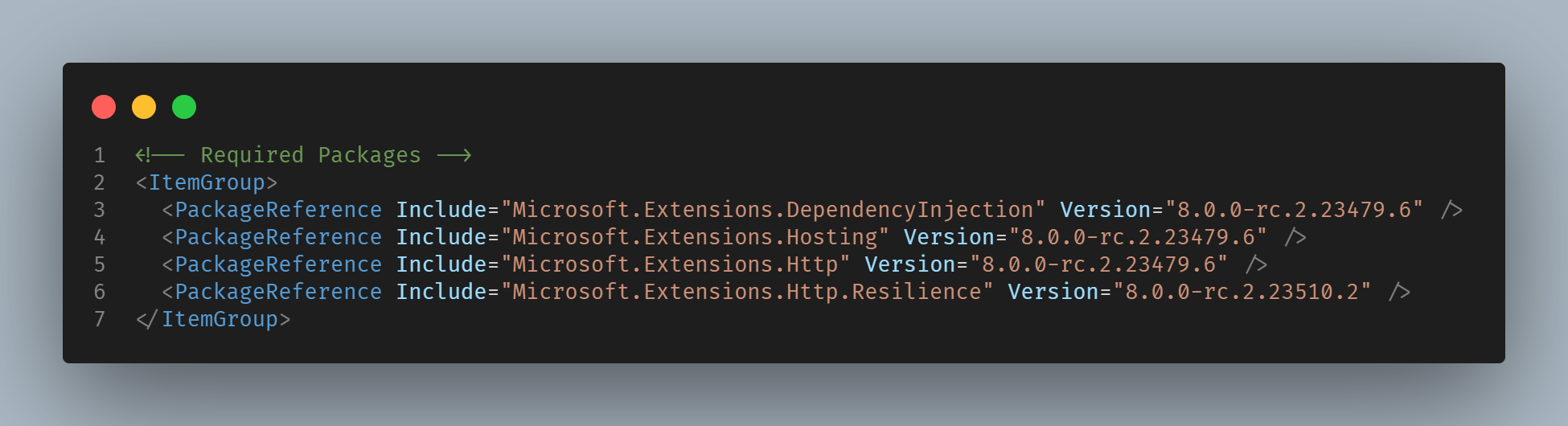
At the time of writing this post, All packages provided by Microsoft are in preview mode for RC2. By the time you are reading this post, it might be available in stable version.
Now, we will add new extension method AddResilienceHandler provided by the package Microsoft.Extensions.Http.Resilience to our Program.cs file. We will also configure the retry policy here.
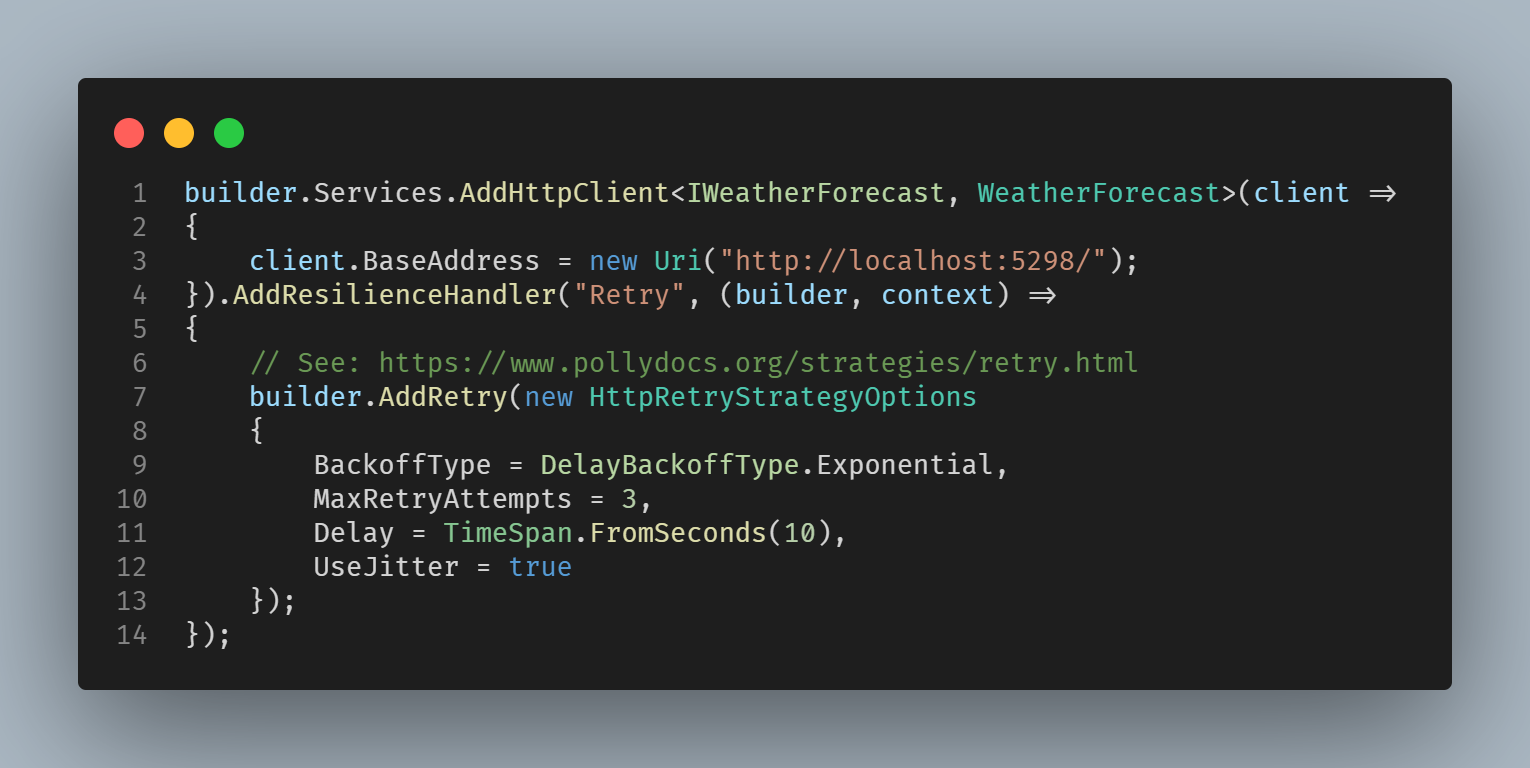
Above code implies that, it will retry 3 times with exponential backoff. It will also add some random jitter to the retry interval.
If you want to learn more about why we need to add jitter to the retry interval, please refer to this article.
Now, if we run the console application, you will see that it will retry maximum configured time with exponential backoff and will eventually pass.
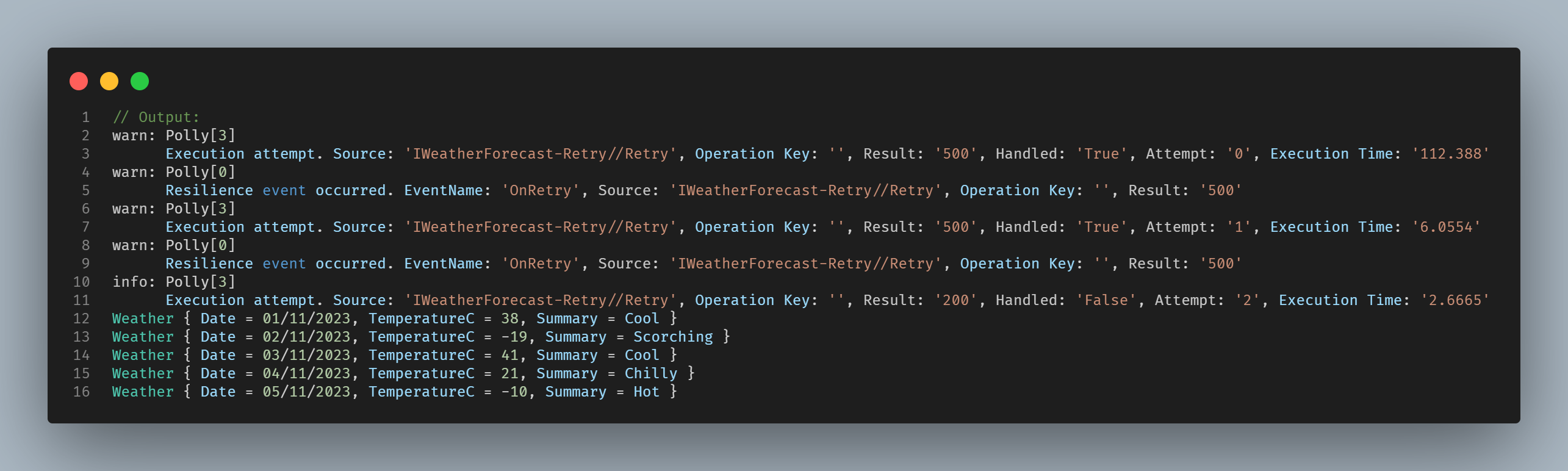
Here, Attempt: 0 is the actual call and Attempt: 1, 2 are the retries.
Conclusion
In this post, we have seen how we can implement Retry strategy for HttpClientFactory using Polly v8 and .NET 8. If you are coming from Polly v7, you will notice that there are some changes in the way we implement the resilience strategy. We will see more about it in upcoming posts.
I would also recommend you to read Anti-patterns here to avoid some common mistakes.
Comments